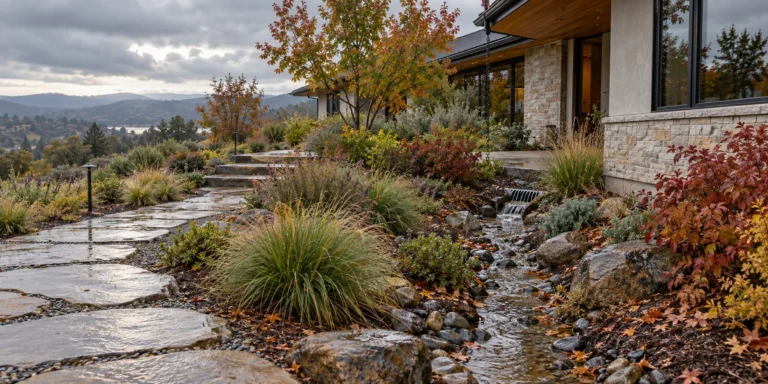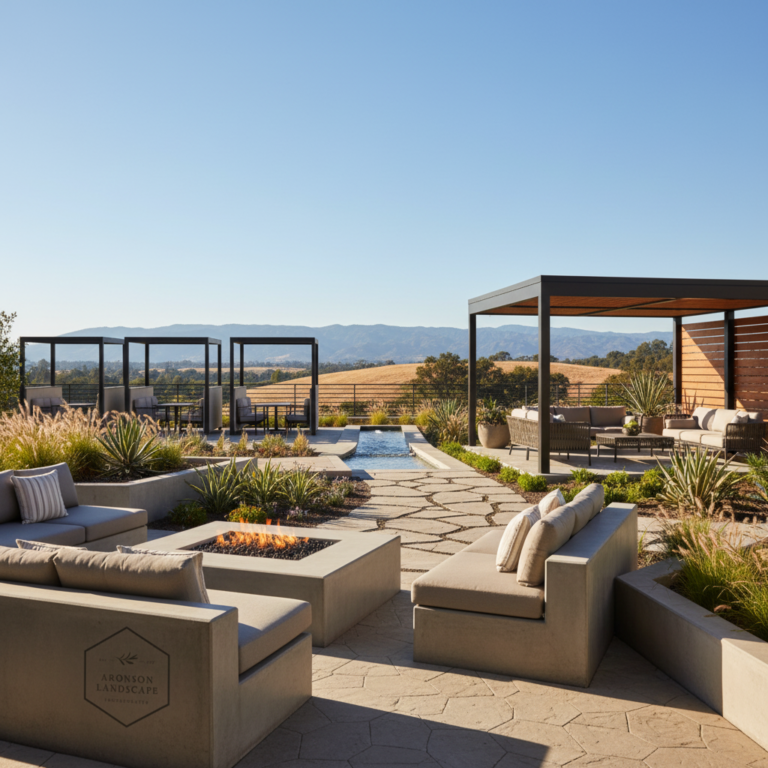
Quick answer: Sustainable landscaping in Placer County can prepare a yard for both dry summers and rainy months. Before fall storms, clear drainage routes, check where roof and patio water goes, adjust irrigation to seasonal conditions, and protect bare soil. A lasting plan starts with the actual slope, soil, plants, and hardscape on your property.
Homeowners in Rocklin, Roseville, Auburn, Loomis, and nearby communities know that water management changes with the seasons. A landscape that needs careful irrigation in August may receive concentrated runoff from roofs and paving in winter. This guide turns broad sustainability ideas into a practical fall inspection. It complements our guide to sustainable landscaping practices with a seasonal checklist you can use before requesting design work.
What should a Placer County homeowner check before fall rain?
- Follow the water. Walk the property after a light rain, if safe, and note puddles, eroded mulch, sediment on paving, and water moving toward the house or a neighbor’s lot. Photos and a simple sketch help a contractor understand the pattern.
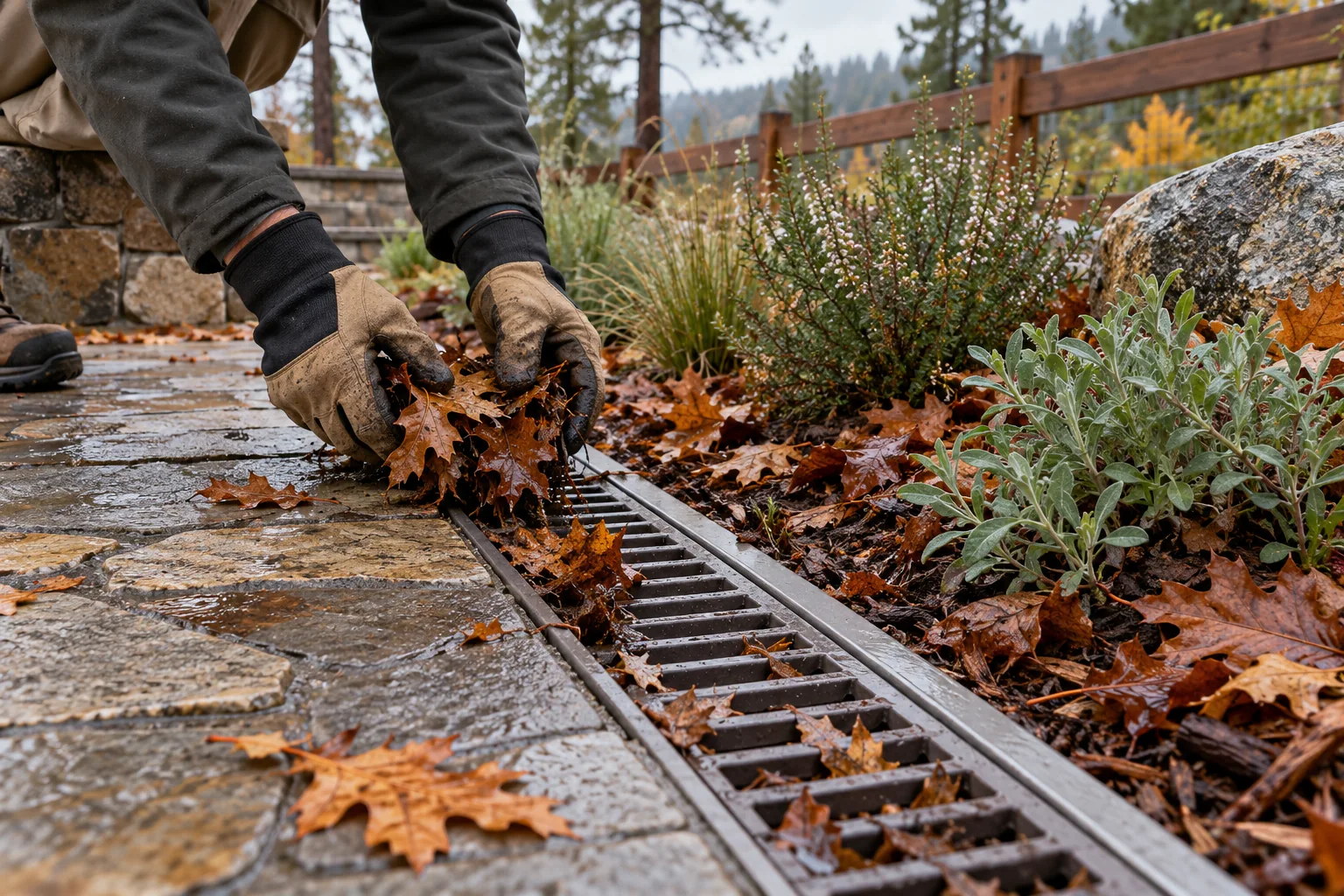
- Clear the outlets. Remove leaves from surface drains and visible channel drains. Check that downspouts discharge to an appropriate location rather than directly against the foundation.
- Inspect grading and hardscape. Look for sunken pavers, soil built up against siding, and paths that send water toward doors. Do not assume a drain alone will solve a grading problem.
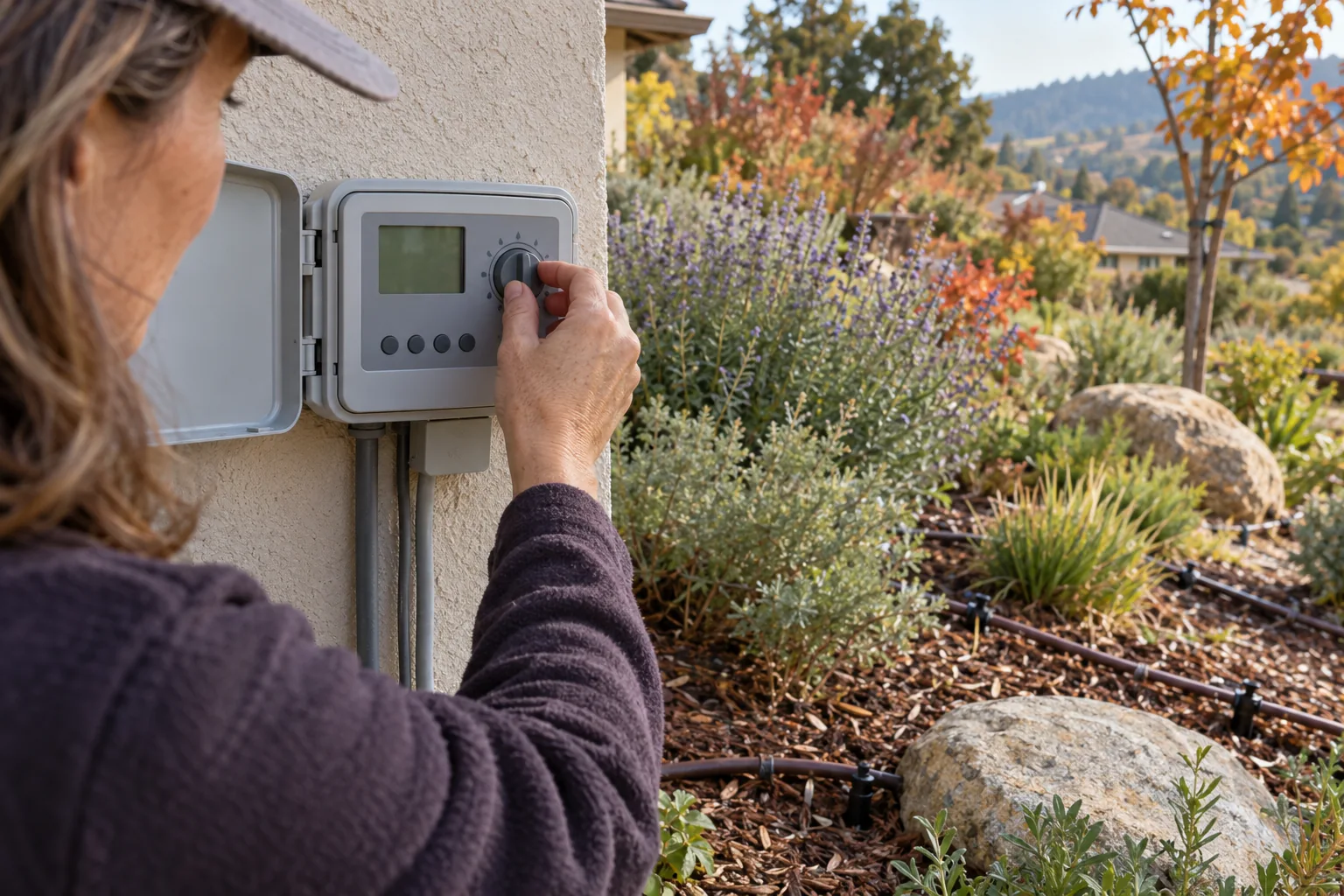
- Revisit the irrigation schedule. Shorter days and cooler weather change plant water needs. UC Agriculture and Natural Resources recommends adjusting landscape irrigation by season, including fall and winter.
- Cover exposed soil. Appropriate mulch and plant cover can slow runoff and protect soil. Keep mulch and soil away from siding and drainage openings.
How do drainage and irrigation fit into sustainable landscaping?
In sustainable landscaping, the goal is to use water where plants can benefit from it while keeping runoff away from structures and problem areas. The U.S. EPA explains that rain gardens, permeable surfaces, and similar green infrastructure can slow and absorb stormwater. Whether one of those features is suitable for your yard depends on the site. A low spot near a foundation, utility, or property line is not automatically the right place for a rain garden.
At Aronson Landscape, the planning conversation should begin with the route water already takes: roof runoff, paved surfaces, planting beds, and the available outlet. A planted swale, adjusted grade, permeable paving, or drainage structure may be part of the answer, but the choice should follow an on-site assessment. Our Placer County landscaping services include drainage grading and water-smart paving, while our residential landscape work includes irrigation and planting design.
Water-wise design also means avoiding unnecessary irrigation. UC Agriculture and Natural Resources notes that seasonal adjustments matter in California landscapes. Check controller settings, visible leaks, overspray onto paving, and whether plants with different water needs share a zone. Changes should reflect plant type, soil, exposure, and current local watering rules.
What affects the cost of a rain-ready landscape plan?
For sustainable landscaping, start with the problem to be solved, not a price from another yard. A minor maintenance visit and a full redesign have very different scopes. Cost drivers include property size, existing slope, access for equipment, soil conditions, buried utilities, hardscape removal, drain outlet options, plant establishment, and any approvals needed. Our earlier Rocklin landscape design cost guide explains broader budgeting factors; a site-specific proposal is the reliable way to price drainage or irrigation work.
Ask for a written scope that identifies the drainage problem, proposed water route, materials, irrigation changes, and maintenance needs. A good design should also explain what happens in a heavier storm and what remains outside the project. Avoid relying on a photo or online estimate to diagnose water near a foundation.
Why local experience matters
Sustainable landscaping needs a practical local team. Aronson Landscape serves Placer and Sacramento County properties and has been led by founder Levi Aronson since 2007. The company’s work spans landscape design, installation, irrigation, concrete, and maintenance. That breadth matters when a rain-ready yard requires planting and hardscape to work together. The images in this article are illustrative; an on-site assessment is needed before recommending construction for a particular property. You can learn more about the team or request a landscape consultation.
Frequently asked questions
Is a rain garden right for every Placer County yard?
No. It needs a suitable location, soil, overflow route, and distance from structures. A contractor should assess the site before directing roof or patio runoff into a planting area.
Should I stop irrigation as soon as rain is forecast?
Review the forecast and your plants’ needs, then adjust the controller appropriately. A rain sensor or weather-based controller may help, but it does not replace checking zones and leaks.
Can permeable pavers fix standing water by themselves?
Not necessarily. The base, soil, slope, and overflow path determine performance. Water collecting beside a house may require grading or another drainage solution.
When should I call a professional about drainage?
Call when water repeatedly pools near a foundation, crosses a walkway, causes erosion, or moves onto a neighboring property. Photograph the pattern and ask for an on-site diagnosis before selecting a product.
Ready to plan a sustainable landscape for the coming seasons? Talk with Aronson Landscape about your property and the water-management goals you want the design to meet.