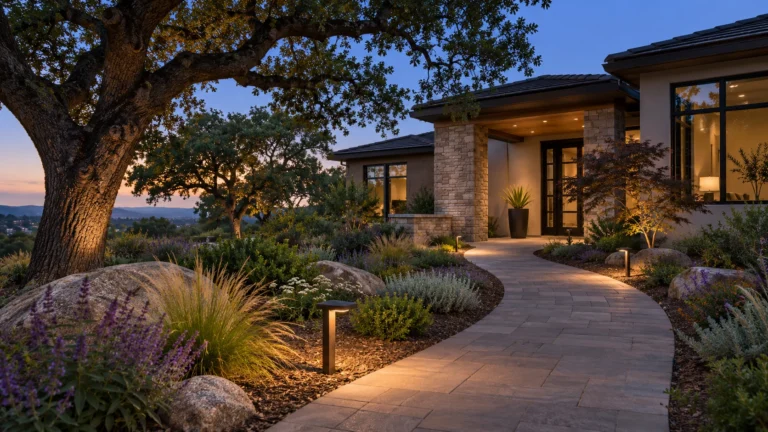
Quick answer: Landscape lighting in Rocklin starts with the route people actually use after dark: the front walk, steps, entry and patio. Aim low-voltage LED fixtures where they help people see and move, then add a few restrained accents for trees or stonework. In Rocklin and the rest of Placer County, the best plan also limits glare toward neighbors and accounts for irrigation, plant growth and seasonal use.
For homeowners searching for landscape lighting in Rocklin, Roseville, Granite Bay or Auburn, the fixture catalog is usually the wrong starting point. Walk your property at night first. Aronson Landscape designs and installs residential landscapes, hardscapes and low-voltage LED lighting across the area. This checklist helps you decide what to light before you request a design or estimate.
1. Landscape lighting in Rocklin starts with the paths people use
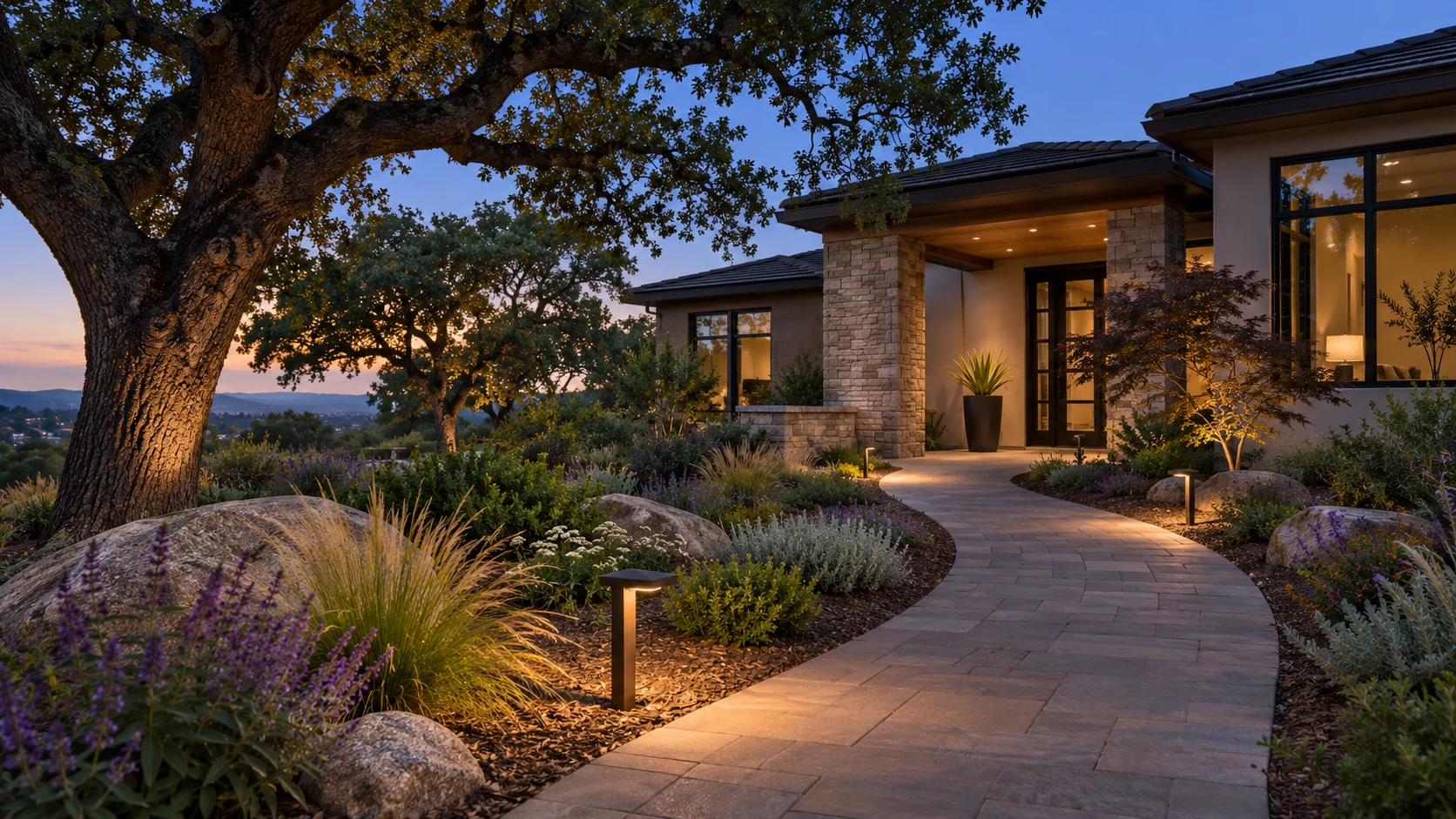
Begin at the sidewalk or driveway and follow the route to the door. Mark any step, change in elevation, turn, gate or uneven surface. Repeat the walk to the patio and outdoor seating areas. The goal is to reveal the edge of the path and the destination without creating a row of bright dots at eye level. A low fixture aimed across the walking surface can be more useful than a high-output fixture aimed at a guest.
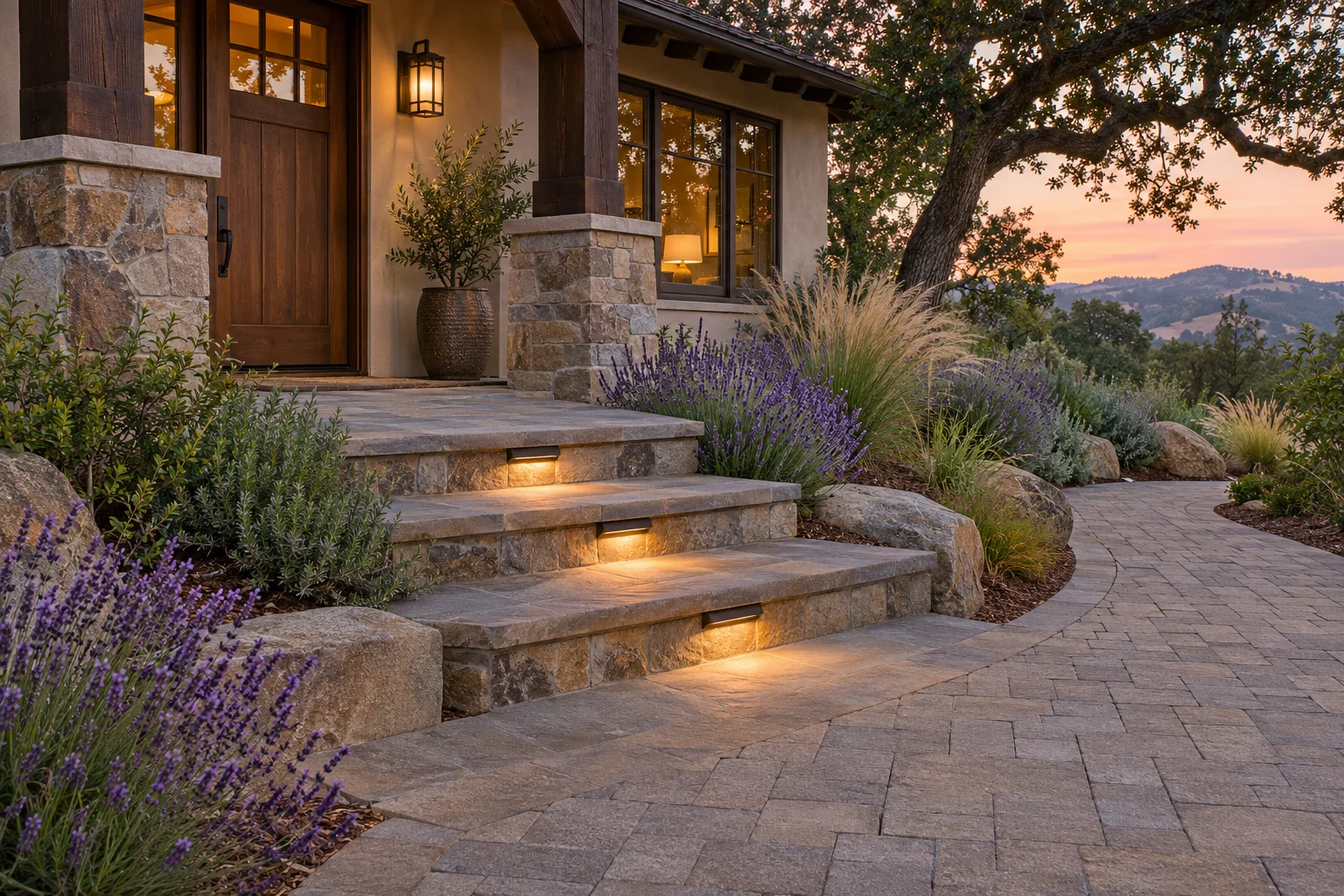
At an entry, consider the combination of path lighting, house-mounted lighting and the light already reaching the door. A designer can balance those sources so the transition from dark to bright feels comfortable. If your route includes pavers, concrete steps or a retaining wall, coordinate fixture placement with the residential landscape design and hardscape plan before installation.
2. Choose the job of each light
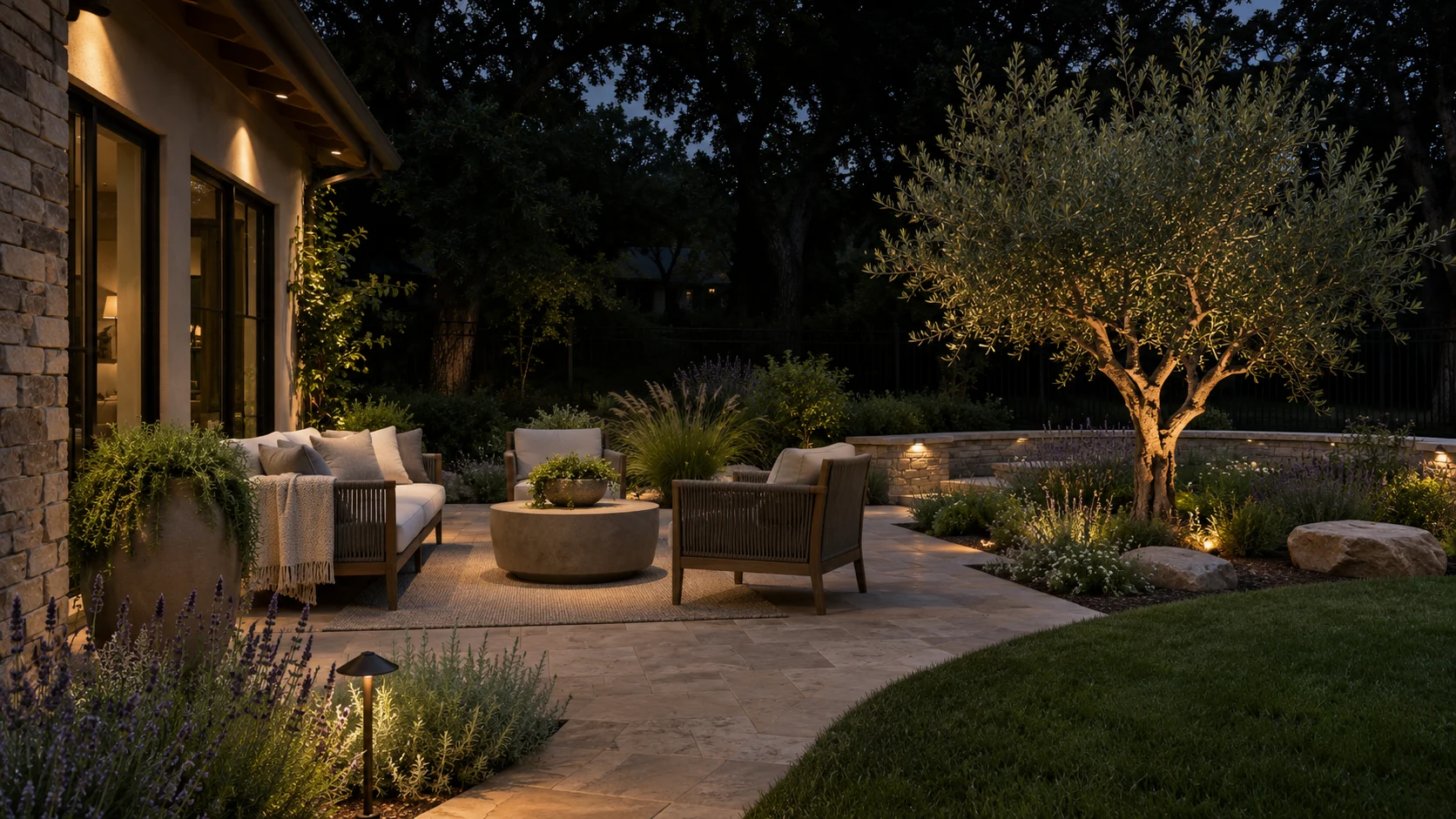
Landscape lights generally do one of three jobs: guide movement, make an activity area usable, or emphasize a feature. Label each proposed fixture with its job. If it does none of these, consider leaving that part of the yard dark. For steps and walkways, focus on consistent visibility. For a patio, think about the light needed at the table and grill. For a specimen tree or textured wall, one carefully aimed accent may be enough.
This approach follows the Five Principles for Responsible Outdoor Lighting published by DarkSky International and the Illuminating Engineering Society: use light only where it is needed, direct it carefully, keep levels low, control when it runs and choose warmer color where possible.
3. Keep glare and spill under control
A fixture can make a landscape look bright while making it harder to see. Stand where a visitor, driver and neighbor would stand. If the lamp itself dominates the view, try a shield, a different angle or a lower output. Avoid aiming uplights into second-story windows or across property lines. Mature plants can hide fixtures later, so plan for both the landscape today and its growth over time.
Warm-colored LEDs are often a comfortable choice for residential paths and planting beds. Use timers, photocells or other controls so the system is on when needed rather than all night. A professional installer can also review local requirements and the electrical work appropriate for your property; rules can vary by fixture and location.
4. Plan around irrigation and hardscape work
For landscape lighting in Rocklin and nearby Placer County communities, the wiring belongs in the same conversation as planting, irrigation and paving. Map sprinkler heads and drip lines so future maintenance does not disturb cable routes. Identify where a path, patio or wall may need a conduit or fixture location before concrete or pavers are installed. Aronson offers concrete and hardscape services alongside residential landscaping, which makes that coordination practical. If drainage or irrigation is part of the project, see our rain-ready landscaping checklist.
For landscape lighting in Rocklin, look for fixture locations in an existing yard that can be serviced after plants fill in. Ask where the transformer and controls will be located, how fixtures can be adjusted, and what routine cleaning or checks the system needs. The least expensive fixture is not always the best value if it is difficult to maintain or produces uncomfortable glare.
5. Test the design at night before finalizing it
Daytime drawings cannot show every reflection, shadow or sightline. If possible, test positions after dark, then view the result from the driveway, front walk, main windows and neighboring edge. Check the path at the lighting level you would use on a normal evening. Adjust aim and brightness before adding fixtures. This is especially useful for glossy paving, pale walls and mature trees that can reflect more light than expected.
Landscape lighting in Rocklin: estimate checklist
- Photograph the yard and the routes you use after dark.
- List every step, gate, patio and seating area that needs light.
- Identify lights that currently shine into windows or a neighbor’s yard.
- Note planned paving, planting or irrigation changes.
- Decide when the system should turn on and off.
- Ask for fixture locations, controls, maintenance access and a nighttime review.
Aronson Landscape serves homeowners in Rocklin, Roseville, Granite Bay, Loomis, Lincoln, Auburn and nearby communities. Explore the team’s service areas or request a landscape estimate for a lighting plan that fits your yard and the way you use it.
Frequently asked questions
What areas should I light first?
Start with paths, changes in elevation, gates and entries. Once those are comfortable to use, add lighting for patios or a small number of landscape features.
Is low-voltage lighting good for a home landscape?
Low-voltage LED systems are a common option for residential landscape lighting. The right layout, fixture output, power supply and installation method depend on the property; have a qualified professional review the plan.
How do I avoid lighting my neighbor’s windows?
Use shielded fixtures, aim beams downward or toward your own surfaces, select only the light level needed, and check the view from the property edge after dark.
Can lighting be added to an existing patio or walkway?
Often yes. A designer should first check access for wiring, fixture mounting, irrigation and future maintenance. If you are planning new paving, coordinate both projects before construction.
When should landscape lighting turn off?
Set controls around how and when you actually use the space. Timers or motion sensing can keep light available for arrivals while reducing unnecessary overnight operation.
Prepared from Aronson Landscape’s published service information and the DarkSky/IES lighting principles. A site visit is needed for fixture placement, electrical details and a project estimate.